EMDR Cognition Cards | 55 Negative & Positive Cognition Cards | Clinical Resource for EMDR Therapists for Case Conceptualization, Target Selection & Reprocessing |
EMDR Cognition Cards | 55 Negative & Positive Cognition Cards | Clinical Resource for EMDR Therapists for Case Conceptualization, Target Selection & Reprocessing |
Couldn't load pickup availability
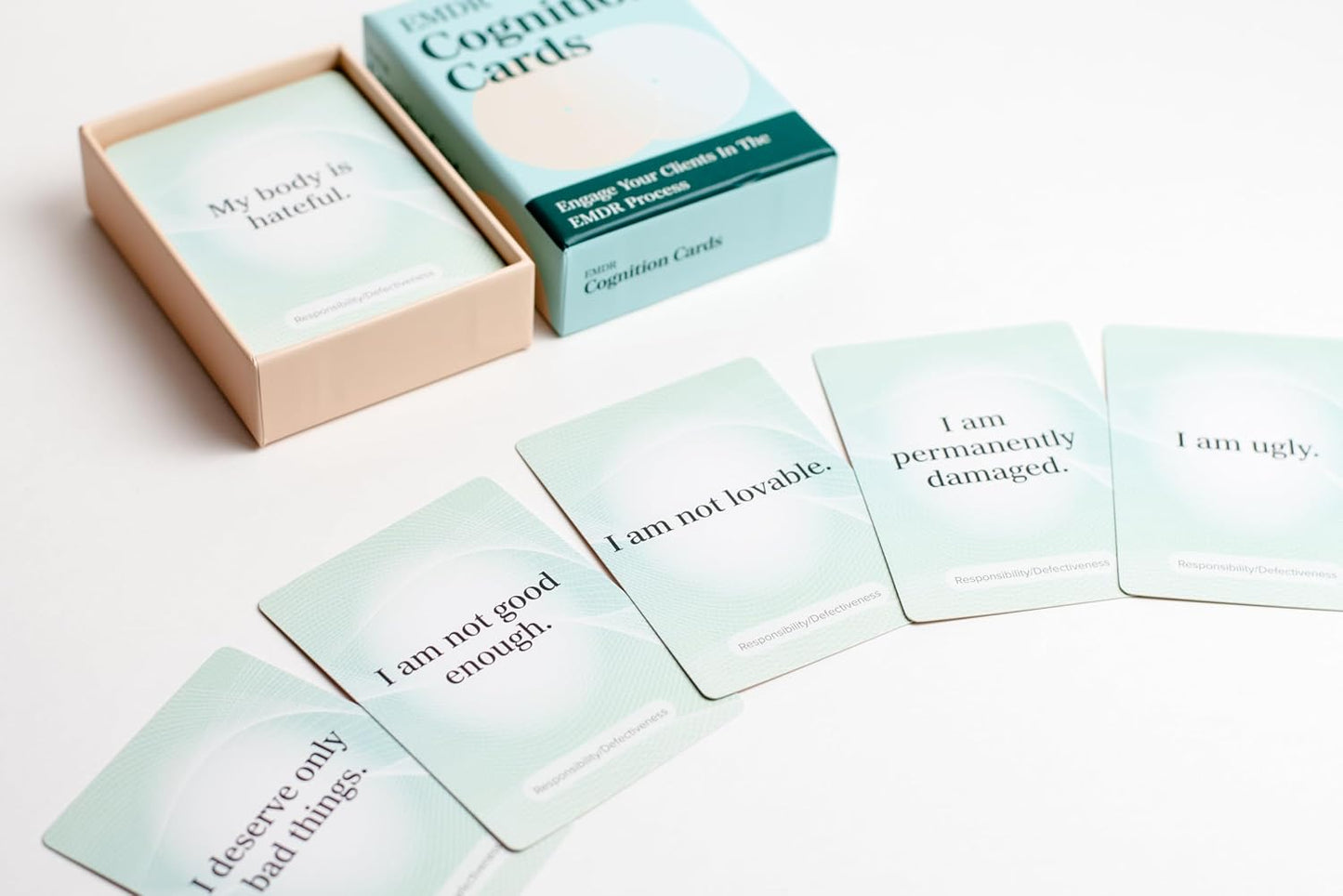
EMDR Cognition Cards help EMDR therapists identify, explore, and organize negative and positive cognitions throughout the EMDR therapy process. Whether selecting targets, identifying Negative Cognitions (NCs) and Positive Cognitions (PCs), or supporting reprocessing, these cards provide a structured, collaborative alternative to static cognition lists. Each of the 55 cards pairs a common negative cognition with its corresponding adaptive positive cognition, allowing clients to physically sort through beliefs, compare language, and identify the statements that resonate most strongly with their lived experience. Designed by EMDR-certified therapist Aly Webster, these cards were created through years of clinical practice and are intended to support efficient case conceptualization, target selection, reprocessing, consultation, supervision, and EMDR training. Ideal for private practices, group practices, agencies, consultants, and EMDR training programs, EMDR Cognition Cards provide a practical tool that helps make the cognition selection process more engaging, collaborative, and clinically effective.
- Help Clients Identify Negative & Positive Cognitions – Designed for EMDR therapists, these 55 cognition cards provide a collaborative way for clients to identify the negative and positive beliefs that best match their experience during EMDR therapy.
- Built for EMDR, Flexible Across Practice – Developed to support EMDR therapy, these cards pair negative and positive cognitions in a format that can also be incorporated into CBT, trauma therapy, and other approaches focused on identifying and reshaping beliefs.
- A Hands-On Clinical Tool – Rather than reading through long cognition lists, clients physically sort and compare cards, often making it easier to recognize beliefs that resonate.
- Useful Throughout Treatment – Incorporate the cards into EMDR preparation, target planning, cognitive interweaves, consultation, supervision, or training to support a more collaborative therapeutic process.
- Developed by an EMDR-Certified Therapist – Created by licensed professional counselor and EMDR-certified therapist Aly Webster, these cards were designed for real clinical practice and everyday use.
Share